
COMPLETE SCENE STUDY
Finding Liv in Budapest: a six-shot storyboard example
Follow one scene from a walk through the party district to a bar entrance. Six consecutive frames show how a setting, an encounter and a change of direction become a practical coverage plan.
One location, three people, six story beats
Scene 12 · Exterior, party district · Day. Liv approaches a bar, notices an exchange between James and a woman, then enters. This sequence includes every numbered shot in the scene, in order.
The storyboard assigns 25 seconds across the six shots. That is planned screen time, not a measured film runtime or generation time. Camera labels are the source’s planning notes; the shot purposes and continuity checks are editorial analysis.
Read each shot as a decision
Start with what changes for the viewer. Then check whether the next frame preserves enough information to make the cut understandable.
Scene 12 · Shot 01
Arrive in the district
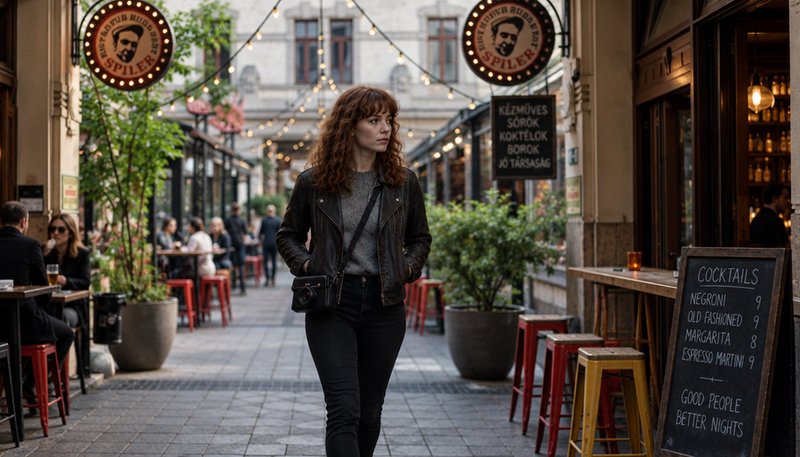
Planned: Long shot · Tracking · 35 mm · 5 seconds
Shot purpose. Establish Liv, her route and the setting before directing attention to a doorway.
Continuity checkpoint. Track the jacket, camera and strap; preserve her direction of travel.
Scene 12 · Shot 02
Notice the entrance
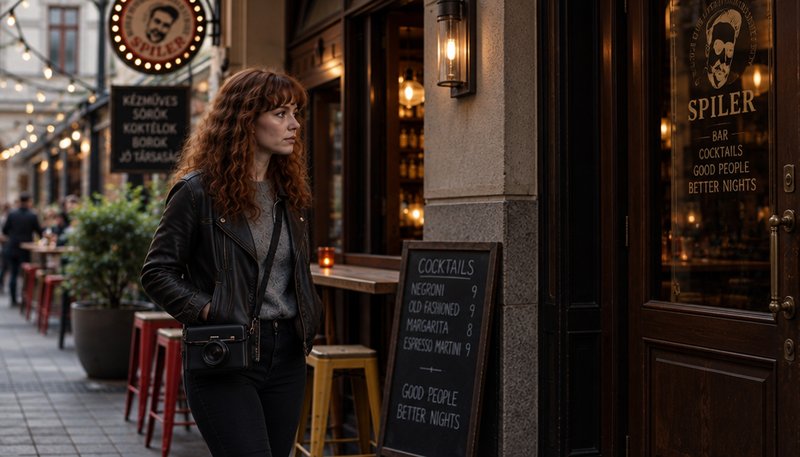
Planned: Medium long · Static · 40 mm · 4 seconds
Shot purpose. Give her attention a destination and turn the walk into a specific story beat.
Continuity checkpoint. Check doorway and menu placement, then establish the direction of her gaze.
Scene 12 · Shot 03
Reveal the disagreement
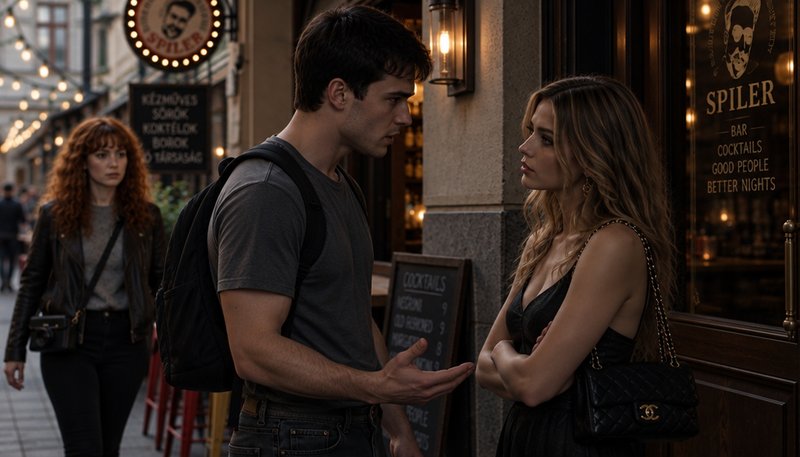
Planned: Three-shot · Slow push-in · 35 mm · 5 seconds
Shot purpose. Place all three people in one view before closer coverage.
Continuity checkpoint. Mark the two speakers’ positions and eyelines; keep Liv’s route consistent.
Scene 12 · Shot 04
Hold on the exchange
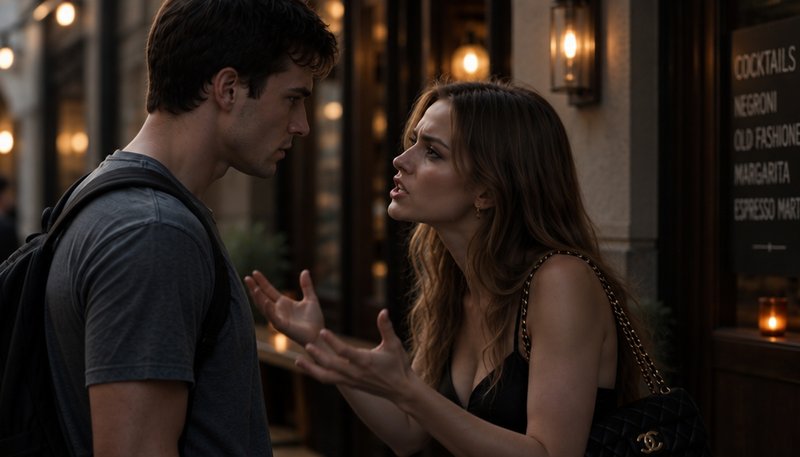
Planned: Medium two-shot · Handheld sway · 50 mm · 4 seconds
Shot purpose. Emphasise the gesture and both faces while retaining the conversation’s geography.
Continuity checkpoint. Choose the gesture position at the cut and match hand action between shots.
Scene 12 · Shot 05
Show the response
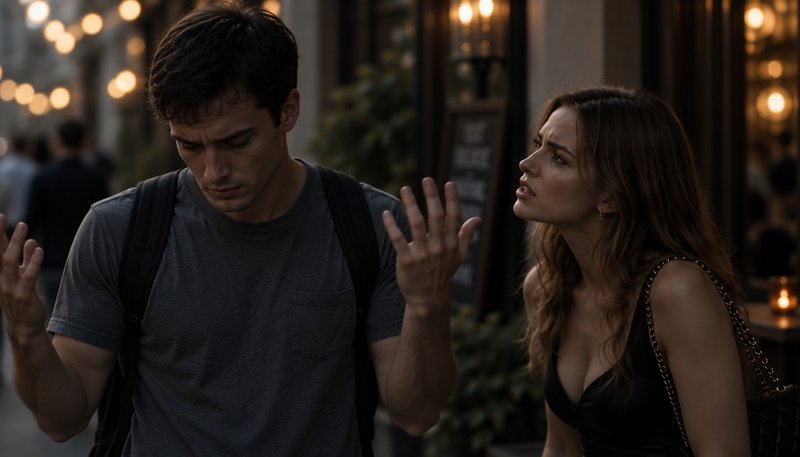
Planned: Medium two-shot · Static · 50 mm · 3 seconds
Shot purpose. Shift the dramatic emphasis to James’s response despite the similar scale.
Continuity checkpoint. Review hand position and gaze; decide whether the reaction warrants a separate cut.
Scene 12 · Shot 06
Move into the next space
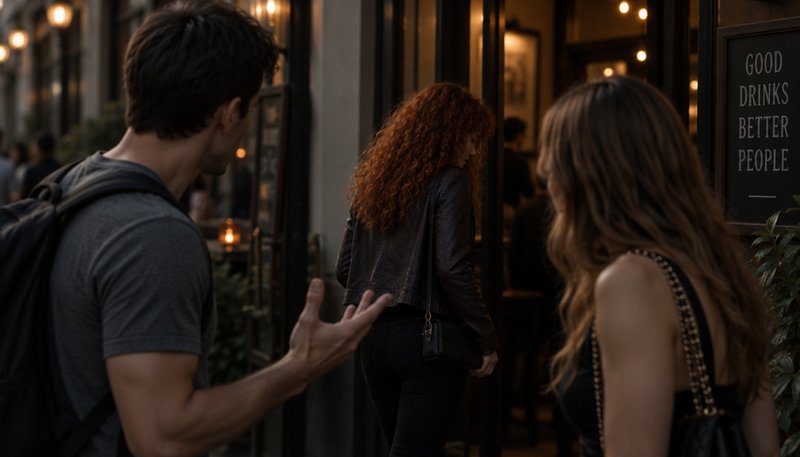
Planned: Medium three-shot · Short track · 35 mm · 4 seconds
Shot purpose. End the exterior scene with an action that establishes the interior continuation.
Continuity checkpoint. Carry her travel direction, camera and clothing into the next scene.
Review the cuts, not just the images
A complete numbered sequence is a useful starting point. Review these joins before treating the plan as ready for production.
- Shots 2 to 3: attention to geography. Sketch the doorway, Liv’s path and the two people outside. Check that the wider reveal answers what attracted her attention.
- Shots 4 to 5: gesture to response. The scale stays similar while James lowers his gaze. Decide where the gesture continues and whether a distinct reaction beat justifies the cut.
- Shot 6 to the next scene: exterior to interior. Plan which side of the doorway the next camera occupies. Carry Liv’s travel direction, camera and clothing into the interior coverage.
Use the character continuity checklist to review identity, wardrobe, props and eyelines across your own sequence.
Take the six-shot plan into a worksheet
The CSV pairs the source’s shot numbers and camera notes with this study’s suggested purpose and continuity checks. A blank review-notes column leaves space for your own decisions. These labels describe a plan, not equipment or footage verified from a finished production.
A practical six-row shot list
Open it in a spreadsheet, compare the rows with the frames above and record what you would change before shooting.
Download the shot-list CSVSix shots · Source camera notes and editorial checkpoints
Read how a storyboard becomes a shot list, then follow the CineBoardHero workflow tutorial to plan your own project.